Mirror thickness explained: 4 mm vs 5 mm, and when it matters
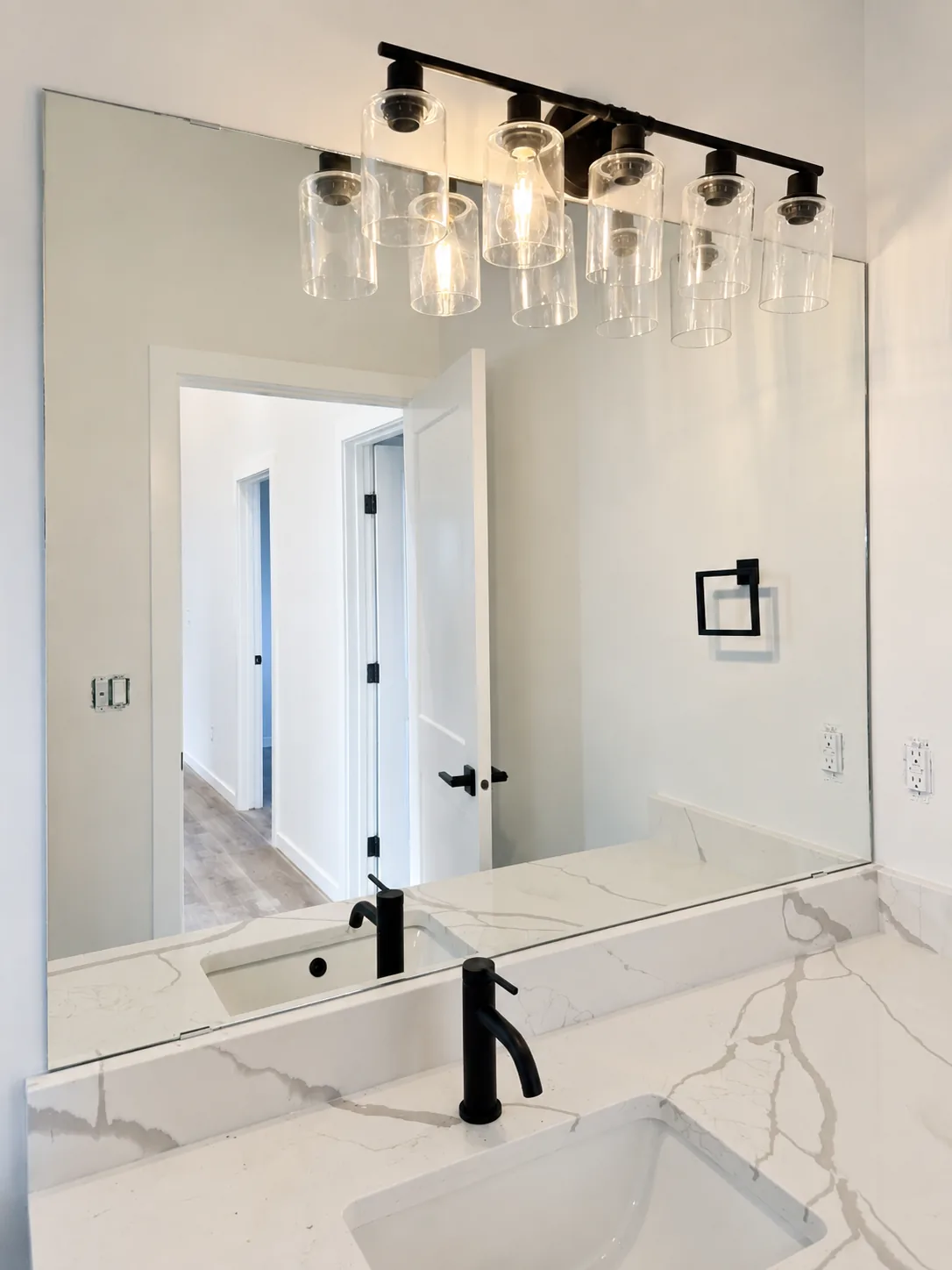
Mirror glass looks like a simple product until you have to specify it. The pane itself is only one decision — thickness, edge finish, and mounting method all interact, and the right combination depends on how big the mirror is, where it goes, and what the wall behind it is doing. Glass Culture supplies mirror glass in 4 mm and 5 mm, and the question we hear most often from Edmonton homeowners and builders is which one they actually need. Here is how we think about it.
What thickness actually changes
A mirror is a sheet of float glass with a reflective silver coating on the back, protected by paint layers. The reflection you see is only as flat as the glass carrying it. Thicker glass is stiffer, so it resists bending — and bending is what produces the subtle waviness people notice when they step back from a large mirror and their reflection stretches or pinches slightly as they move.
That stiffness matters in three ways:
- Optical stability. A 5 mm pane holds its shape across a wider span, so the reflection stays truer over large surfaces.
- Handling. Thicker glass is less likely to flex during transport and installation, which is where a lot of mirror damage actually happens.
- Wall tolerance. A thin mirror bonded to an uneven wall will follow that wall. A thicker pane bridges minor irregularities instead of telegraphing them into the reflection.
Thickness does not change the quality of the silvering, and it does not make a mirror safety glass on its own. Those are separate specifications.
When 4 mm is the right call
4 mm is a sound, conventional choice for most residential mirrors of moderate size. It is lighter, easier to handle in tight spaces, and sits closer to the wall — which can matter when a mirror is set into a recess, framed, or fitted against trim.
Consider 4 mm when:
- The mirror is a typical vanity size, roughly up to about 48 inches wide.
- It will be framed, which adds rigidity and support along the perimeter.
- Weight is a concern — an older wall, a hollow-core door, or a limited fastening substrate.
- The mirror sits in a recess or against millwork where added thickness would complicate the fit.
When the extra millimetre earns its place
5 mm is the safer specification once a mirror gets large, unframed, or is going somewhere it will be looked at closely and often. The difference sounds trivial on paper, but the increase in stiffness is meaningfully greater than the twenty-five per cent increase in thickness suggests.
We generally recommend 5 mm when:
- The mirror spans a full vanity wall or runs 60 inches or more in either direction.
- It is unframed with exposed edges, so nothing else is stiffening the panel.
- It is a full-length or gym-style mirror where people assess their whole reflection.
- The wall is known to be less than perfectly flat, or the installation will be glue-on.
- The mirror is in a commercial or high-traffic space where durability outweighs weight.
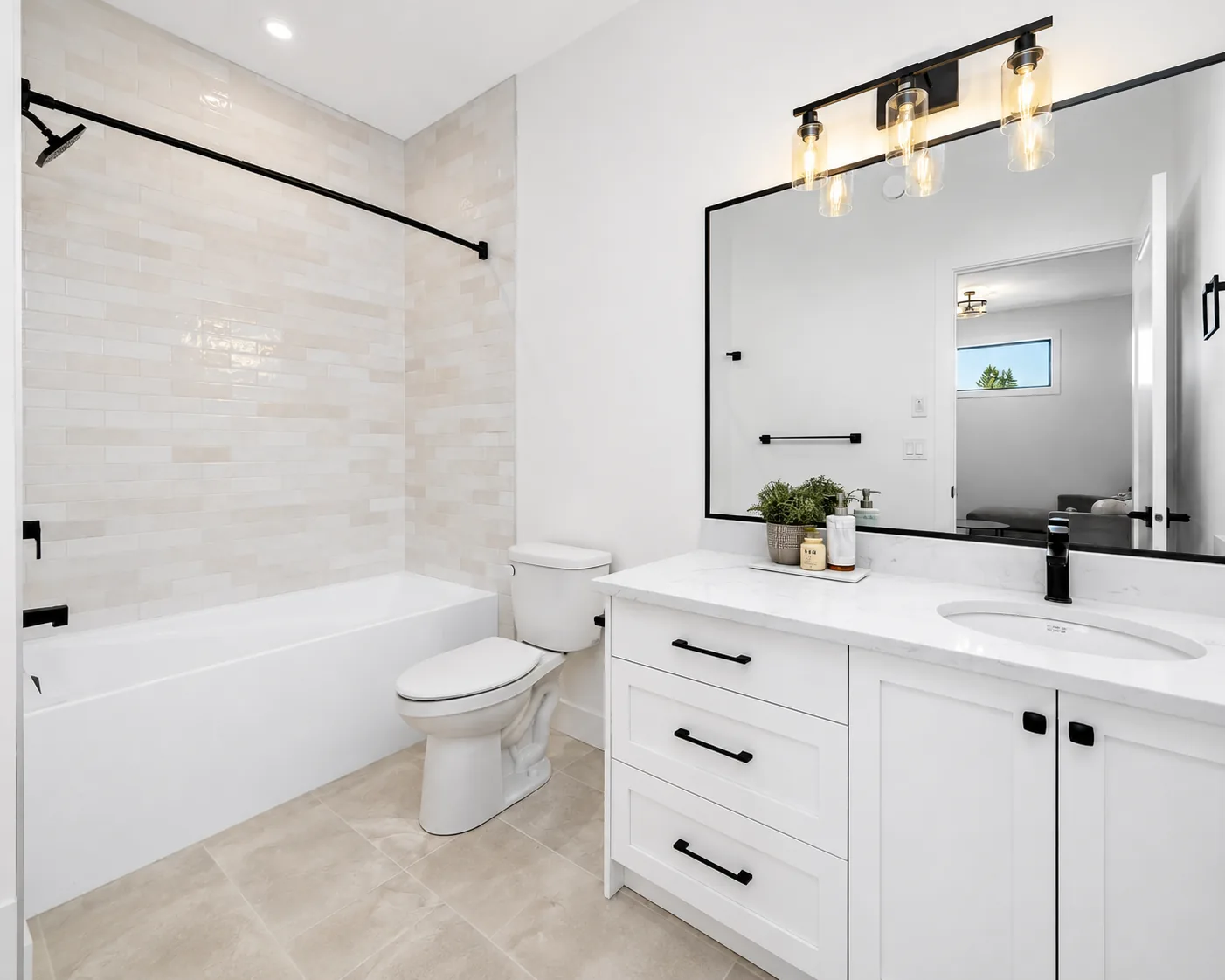
Edgework: the detail people notice
Any mirror with an exposed edge needs a finished one. Cut glass leaves a sharp arris that is unsafe to handle and visually raw. Two finishes cover most projects:
- Polished (flat) edge. The edge is ground and polished smooth, staying square to the face. Clean and quiet — it suits contemporary bathrooms and lets the mirror read as a plane of glass rather than an object.
- Bevelled edge. A wider angled facet is ground around the perimeter, catching light and creating a fine line of refraction. It gives a mirror more presence and reads as traditional or transitional.
Thickness and bevel interact. A bevel on 5 mm glass has more material to work with and produces a crisper, more visible facet than the same bevel on thinner stock. If the bevel is meant to be a design feature rather than a detail, the thicker glass will show it better.
Mounting: J-clips or glue-on
How a mirror is held to the wall is not a minor detail — it determines whether the panel stays flat and whether it can ever come off again.
- J-clips. Metal channels fastened to the wall, with the mirror resting in a bottom channel and retained by top clips. Mechanical, removable, and forgiving. Good where the mirror may need to come down later, or where you want the fasteners doing the work rather than adhesive.
- Glue-on (mastic). Mirror-safe adhesive bonds the panel directly to the substrate for a clean, clip-free look. It is effectively permanent, and it demands a flat, sound, properly prepared wall. Only mirror-rated mastic should be used — ordinary construction adhesives can attack the backing paint and silver, producing dark edge creep over time.
That last point applies regardless of mounting method. Silver deteriorates where moisture reaches the backing, so bathroom mirrors benefit from good ventilation, sealed cut edges left properly finished, and a small gap at the base rather than glass sitting directly in standing water on a countertop.
Cutouts and custom shapes
Mirrors rarely fit a rectangle in the real world. We cut to custom sizes and shapes, including cutouts for outlets, switches, sconces, and plumbing fixtures. Cutouts do weaken a panel locally, particularly near an edge or corner, so on a mirror with several penetrations — a vanity wall with two sconces and a receptacle, for example — 5 mm is the more forgiving choice. On-site measurement is worth taking seriously here: walls are seldom square, and a template taken from the actual opening beats a drawing dimension every time.
If you are working through a bathroom, gym, or entry mirrors package and are not sure which thickness suits the span, we can measure on site, fabricate to your dimensions, and handle delivery and installation. Request a free quote and we will walk through the options with you.