What drives the cost of a frameless shower in Edmonton?
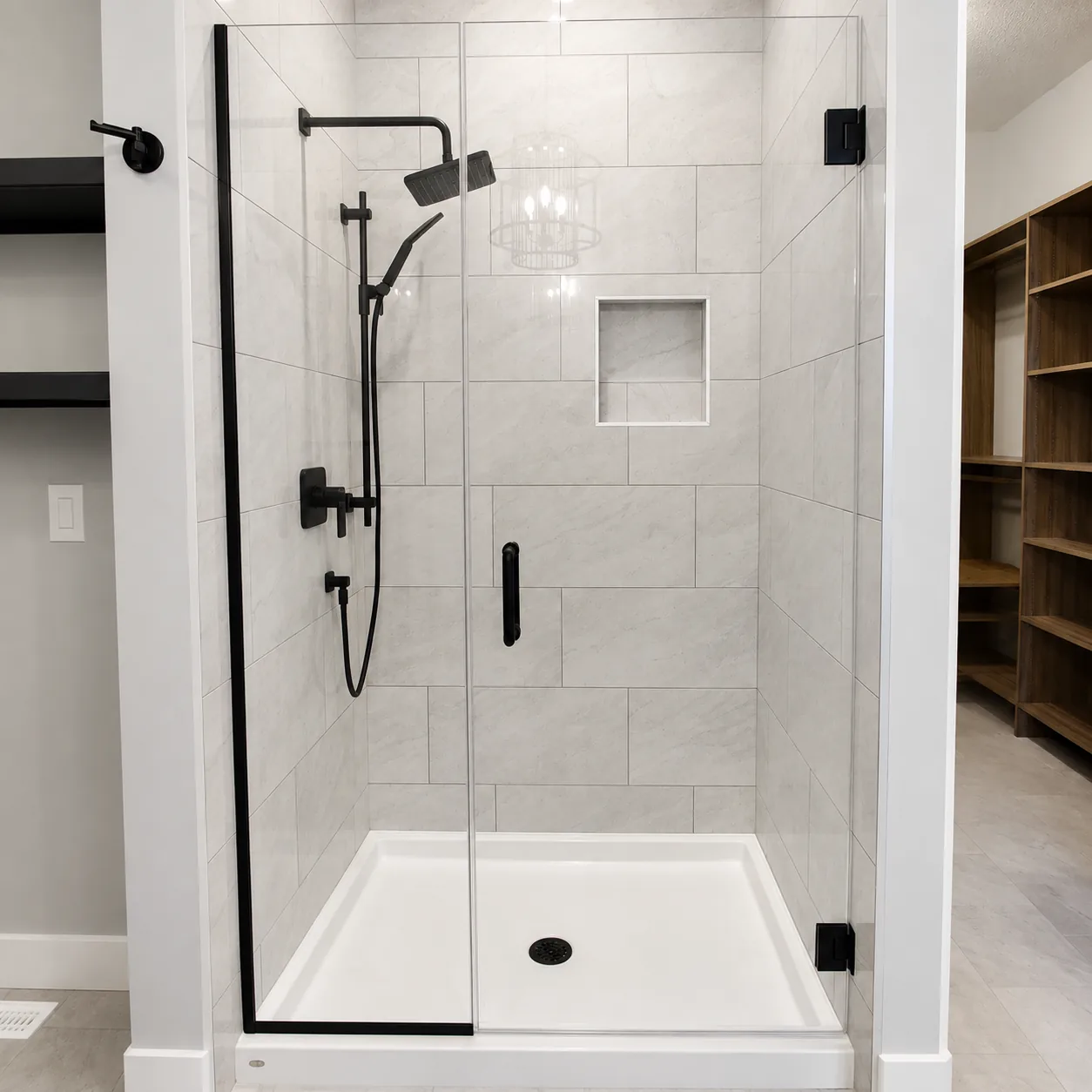
“What does a frameless shower cost?” is the most common question in shower glass, and any number you find on the internet is guessing. Two enclosures that look identical in photos can be very different jobs once you know what went into them — and the price follows the job, not the photo. Every shower we quote in Edmonton is priced from its own measurements, which is also why the quotations are free.
What we can do is show you the levers. These are the factors that actually move the cost of a glass shower, so you can see where your project sits and where you have room to decide.
1. Configuration: how many panels, doing what
The biggest factor is simply how much glass there is and what each piece has to do. In rough order of complexity:
- A single fixed panel beside a walk-in shower — one piece of glass, no moving parts.
- A door alone on a tiled opening — hinges and a handle enter the picture.
- A door plus a fixed panel — the most common frameless layout.
- A corner or multi-panel enclosure — more glass, more joints, and more geometry that has to agree.
Each step adds fabrication and installation work. A useful exercise: count the pieces of glass in the design you are considering, then count the moving pieces. Those two numbers set the shape of the price before any option does.
2. Frameless, framed, or in between
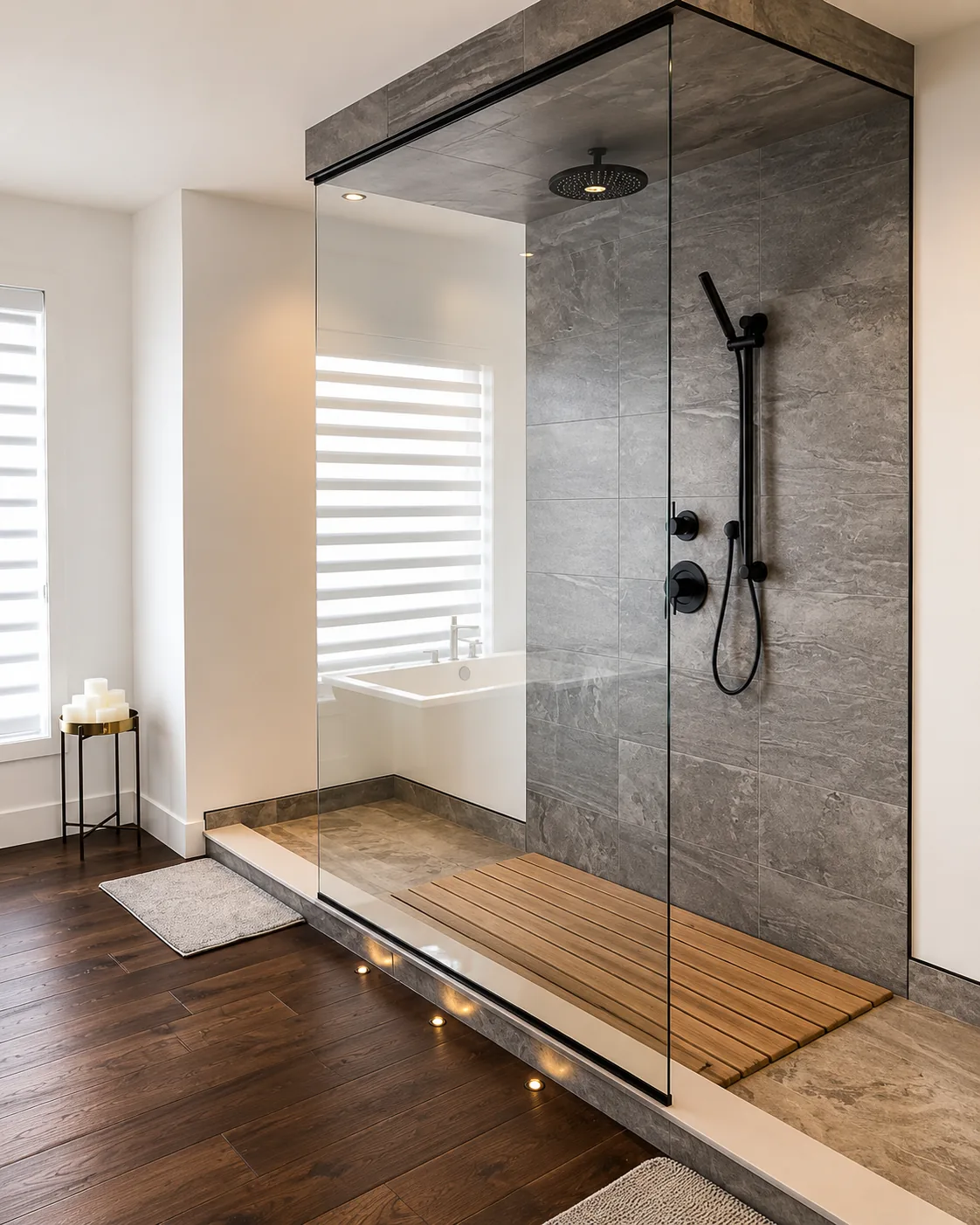
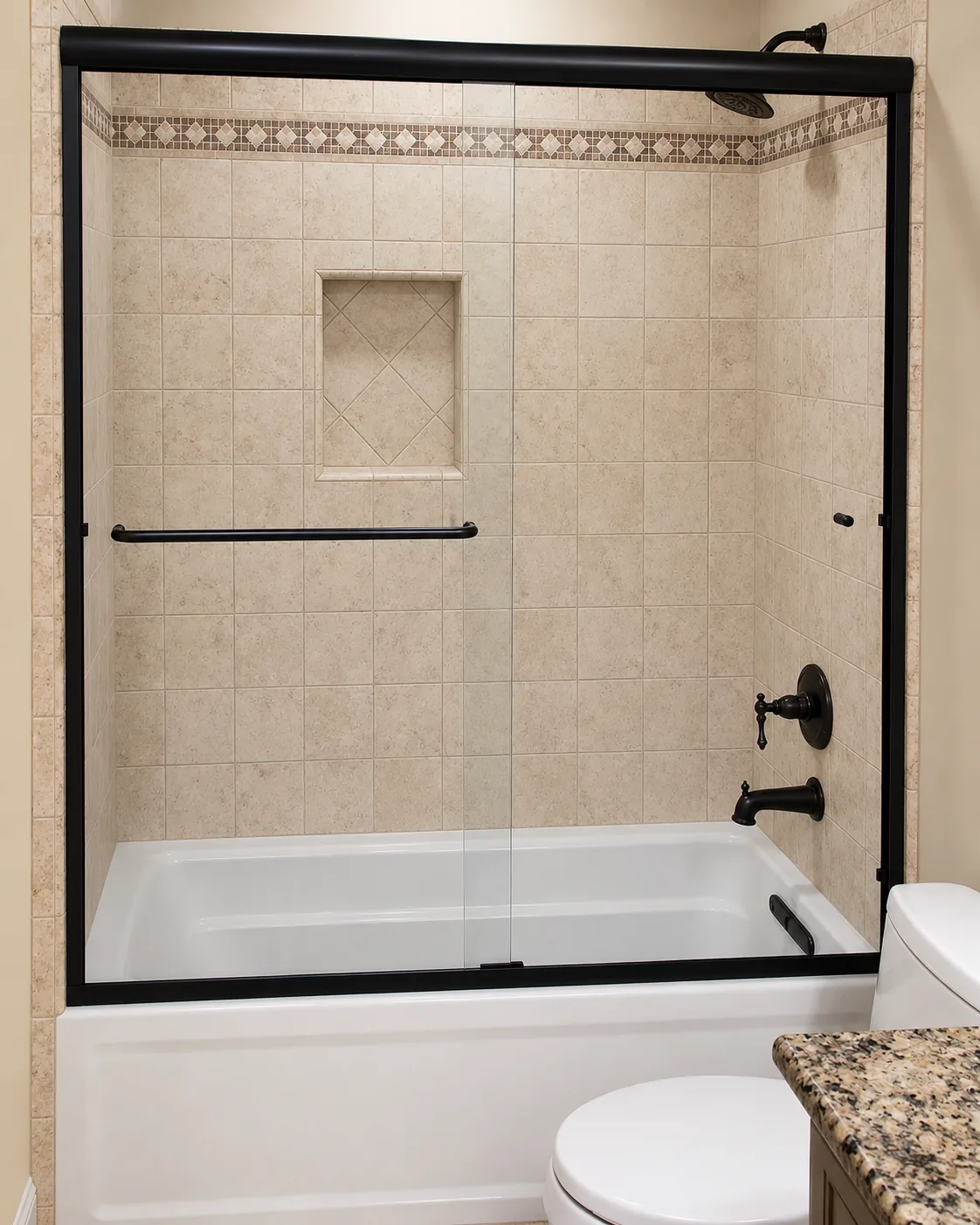
Frameless enclosures are built from thicker tempered glass so the panels can carry themselves, with hardware only where it is needed — that is what produces the clean, all-glass look. Framed and semi-framed enclosures use lighter 6 mm glass supported by their frame, and sliding tub doors fall in this family too. Neither is “better”; they are different products at different points on the scale, and a framed sliding door is often exactly the right call for a tub or a rental property, while frameless earns its place in a showpiece ensuite.
3. Glass thickness
Shower glass at Glass Culture runs from 6 mm through 8 and 10 mm custom heavy glass. Thicker glass costs more to buy, fabricate, and handle — a 10 mm panel is a genuinely heavy object — but it is also what gives a frameless enclosure its solidity. Where your project lands is usually settled by the configuration: framed systems use 6 mm, frameless work calls for heavy glass.
4. Openings, cutouts, and site conditions
Every hole for a hinge, handle, or fixture is fabrication work that must be finished before tempering, so hardware choices show up in the glass price, not just the hardware price. The site matters too: out-of-plumb walls, out-of-level curbs, and tight access do not stop a project, but accommodating them is part of the work being quoted. This is why measurements come before numbers — and why our guide to measuring a frameless shower insists you measure after the tile is done, never before.
Where people save, and where they should not
There are good places to economise on a shower. Configuration is one: a fixed panel instead of a full enclosure, or a framed system instead of frameless, changes the number honestly — you get a simpler product and pay for a simpler product. Hardware finish is another lever that moves cost without touching function.
The places not to economise are the ones you cannot redo cheaply: the measurements, and the glass being fabricated to them. An enclosure that fits its opening drains properly, closes properly, and looks right every day you own it. That quality comes from the process, and it is the part worth paying for once and never thinking about again.
Getting your number
Glass Culture supplies and installs shower glass in Edmonton, Alberta — framed and frameless, 6 through 10 mm, fabricated to your measurements. Tell us the configuration you have in mind and the rough size of the opening, and we will come back to you with a free quotation for your actual shower. Start your quote here, or call 780 700 0156.