Wire or melamine? Planning closet and pantry shelving that actually fits
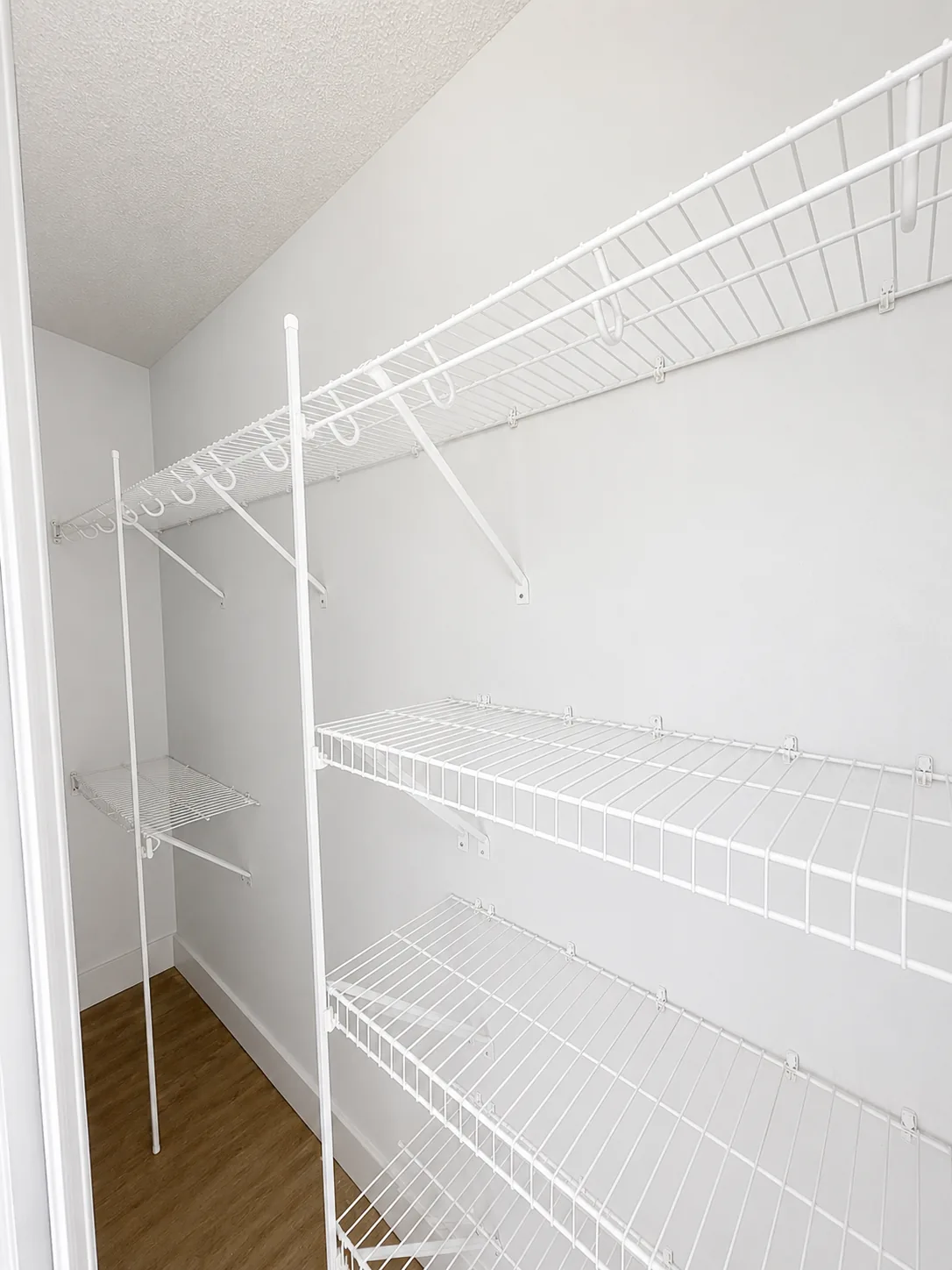
Closet and pantry shelving is one of those details that gets decided late, often after the drywall is up and the paint is dry. That is usually when the questions start: how deep should the shelf be, how high should the rod sit, and should it be ventilated wire or solid melamine. The answers are not complicated, but they do depend on what is going into the space and how the wall is built. Here is a plain look at how to plan shelving that fits the first time.
Wire and melamine do different jobs
Ventilated wire shelving is light, coated for corrosion resistance, and open along its whole length. Air moves through it, which matters in linen closets, laundry rooms, and any closet on an exterior wall where trapped humidity can leave clothing smelling stale. It is also easy to wipe down and it does not collect dust in the same way a flat surface does.
Melamine is a solid surface with a finished face. Nothing tips, nothing slips through, and small items sit flat. That makes it the better choice for pantries full of spice jars and bagged goods, for garage and utility shelves holding hardware and tools, and for anywhere the shelf is visible enough that you want a clean continuous line.
A lot of homes end up with both. Wire in the bedroom and linen closets, melamine in the pantry and the garage. There is no rule that says one system has to run through the whole house.
Depth: match it to what you are storing
Glass Culture supplies ventilated wire shelving in 9 inch, 12 inch, and 16 inch depths, and the choice is driven almost entirely by contents.
- 9 inch suits pantries, linen closets, and any shelf where you want to see everything at a glance. Shallow shelves stop items from disappearing at the back.
- 12 inch is the common all-purpose depth for reach-in closets, folded clothing, and shelf-over-rod installations.
- 16 inch handles bulk storage, bins, small appliances, and garage or utility use where you want the extra footprint.
One caution on deep shelves in a narrow closet: a 16 inch shelf in a 24 inch deep closet leaves little room to stand items in front of the door swing. Measure the clear opening, not just the wall.
Heights that actually work
For a single-hang closet with a shelf above the rod, a shelf set somewhere in the 66 to 72 inch range above the finished floor suits most adults, with the rod hung just below it. Long-hang space for dresses and coats generally needs roughly 60 to 70 inches of clear drop below the rod.
Double-hang gets more storage out of the same wall. Set the upper rod around 80 to 84 inches and the lower rod around 40 inches, which leaves usable hanging height in both zones for shirts, folded trousers, and jackets. Confirm your longest garment before committing, since one winter coat can dictate the whole layout.
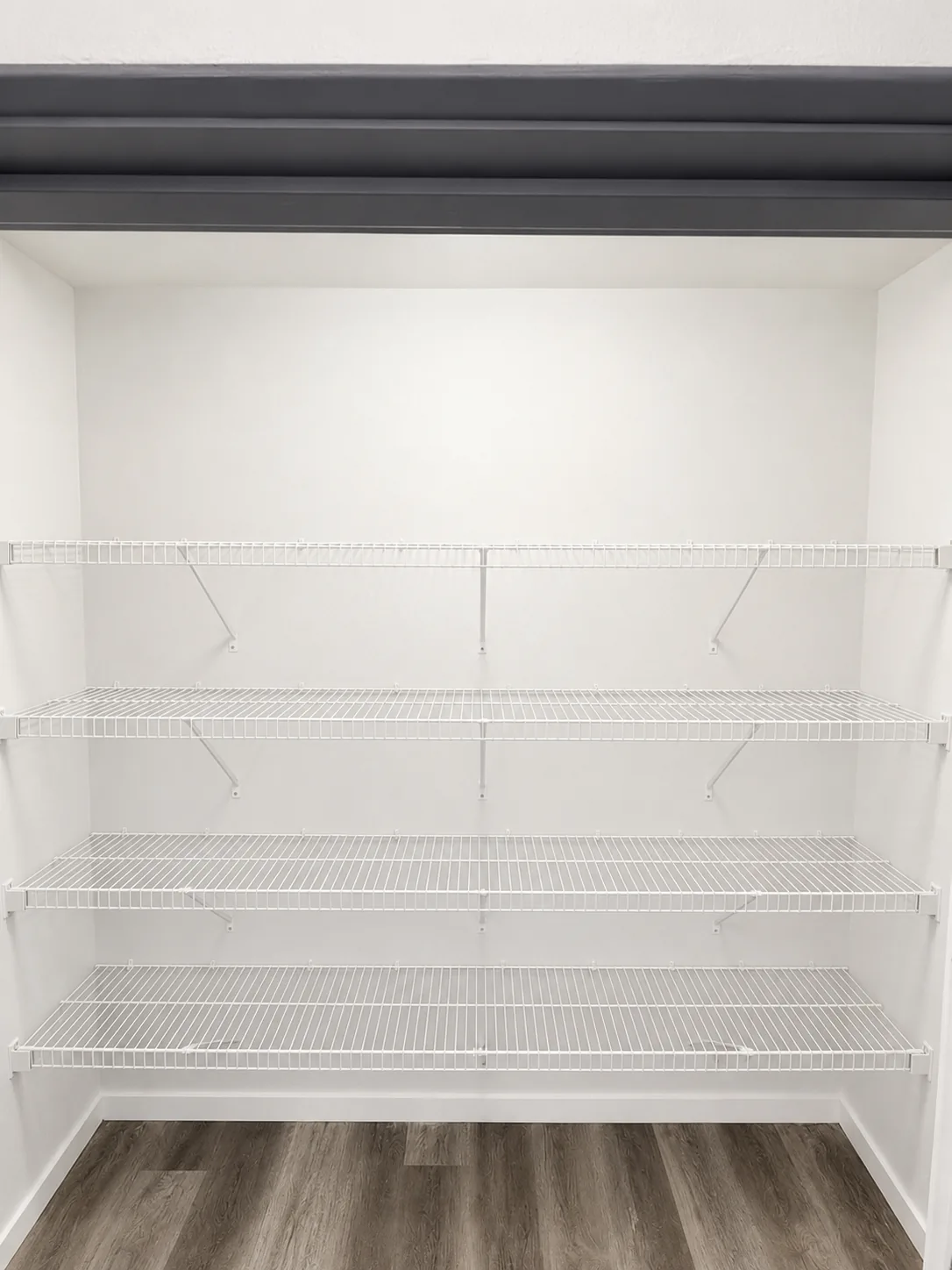
Pantry shelves are best planned in tiers rather than at one uniform spacing. Around 14 to 18 inches at the bottom for large containers and small appliances, 10 to 12 inches through the middle for cans, boxes, and jars, and tighter spacing near the top for anything flat.
How it attaches matters more than the shelf itself
A shelf is only as strong as what holds it to the wall. Fastening into studs is always the first choice, and locating them before layout is worth the few minutes it takes. Where a bracket lands between studs, a properly rated drywall anchor set in undamaged board is the fallback. Capacity depends on bracket spacing, anchor type, and the wall itself, so plan for closer bracket spacing anywhere you expect heavy or concentrated loads, such as canned goods or tools.
Fixed-mount systems bolt in at set heights and are the simplest, sturdiest option once the layout is settled. Adjustable systems run on vertical standards, which lets you move shelves later — useful in a child's closet, a pantry whose contents change, or a space you are still figuring out. Glass Culture supplies both, and wire shelving comes in White and Satin Nickel.
A workable planning order
- List what goes in the space, including the tallest and heaviest items.
- Measure the closet width at three heights, the depth to the door, and the ceiling height.
- Decide on hanging zones first, then fill the remaining wall with shelves.
- Choose depth by contents, and wire or melamine by whether you need airflow or a flat surface.
- Mark stud locations and check for anything buried in the wall before drilling.
If you would rather not work through the measuring yourself, that is a normal part of the job. Glass Culture measures on site in the Edmonton area, fabricates shelving to the dimensions of the actual opening, and handles delivery and installation. Send along your rough dimensions or request a free quote and we will help you settle the layout before anything is cut.